Mustang Hoof Care: What Every Owner Needs to Know
Wild horse hooves are genuinely impressive. Decades of natural selection have produced feet that can handle miles of varied terrain without any human intervention. When you bring that horse into a domestic environment, the same hooves that thrived on the range face a set of new conditions and the transition requires attention.

Hazel with her trainer at Wild Ride learning how to stand for the farrier!
What makes mustang hooves different
Wild horses travel significant distances daily over hard, varied ground. This natural movement shapes their hooves in a way that domestic horses maintained in stalls or small paddocks simply do not experience. The result is typically a hoof with a harder wall, more concavity, and a thicker sole than you see in most domestic horses.
This is generally a good thing and also means the first trim requires a farrier who understands what they are looking at and knows not to over-correct. If you’re able to find a farrier who has knowledge of barefoot trimming, this will most likely be your best bet.
The most common mistake new owners make is bringing in a farrier who applies a domestic trim standard to a wild horse hoof. Removing too much too fast can leave a horse sore on its feet, which sets back your gentling work significantly. A horse that is uncomfortable walking is not a horse that is going to engage willingly with training, domestic or wild born.
The transition period
Ask specifically when you call whether the farrier has worked with mustangs. Do not worry if you have to wait until after gentling is achieved for a first hoof-trim. For everyone/every horses’ safety, including the farrier – it is typically okay to wait until after the horse is able to lift their legs and has had farrier training. If it is for an emergency, we recommend consulting with a veterinarian for possible sedation. Both professionals can be found in our directory!
The first farrier visit is also a training milestone. How it goes sets a template for every future visit. A farrier who moves slowly, allows the horse to investigate tools, and does not push past the horse’s tolerance level is doing you a favor that lasts years. A farrier who gets impatient and forces it through produces a horse that is harder to handle at every subsequent visit. What we’ve done in the past is when the farrier was visiting the barn to trim multiple horses, we scheduled a “meet and greet” of sorts. This allowed our mustang to get to know the farrier, and slowly work towards the “big day.” Side note: the farrier is a working professional, and we always recommend compensating them for their time, even if it is only a “training” session.
This is another reason why working with a trainer from early on matters. Desensitizing a horse to having its legs and feet touched is part of the foundational training work, and getting it right before the first farrier visit makes the whole thing go better for everyone involved.
Ongoing care
Once your horse is settled and accepting basic handling, six to eight week farrier intervals are standard. Some horses with harder hooves and adequate movement can go a bit longer. Your farrier will advise you based on what they see.
Watch for any changes in how your horse moves or stands. Soreness, reluctance to move forward, or standing with weight shifted off a particular foot are signals to call your farrier or vet before the next scheduled visit.
Self-trimming stations
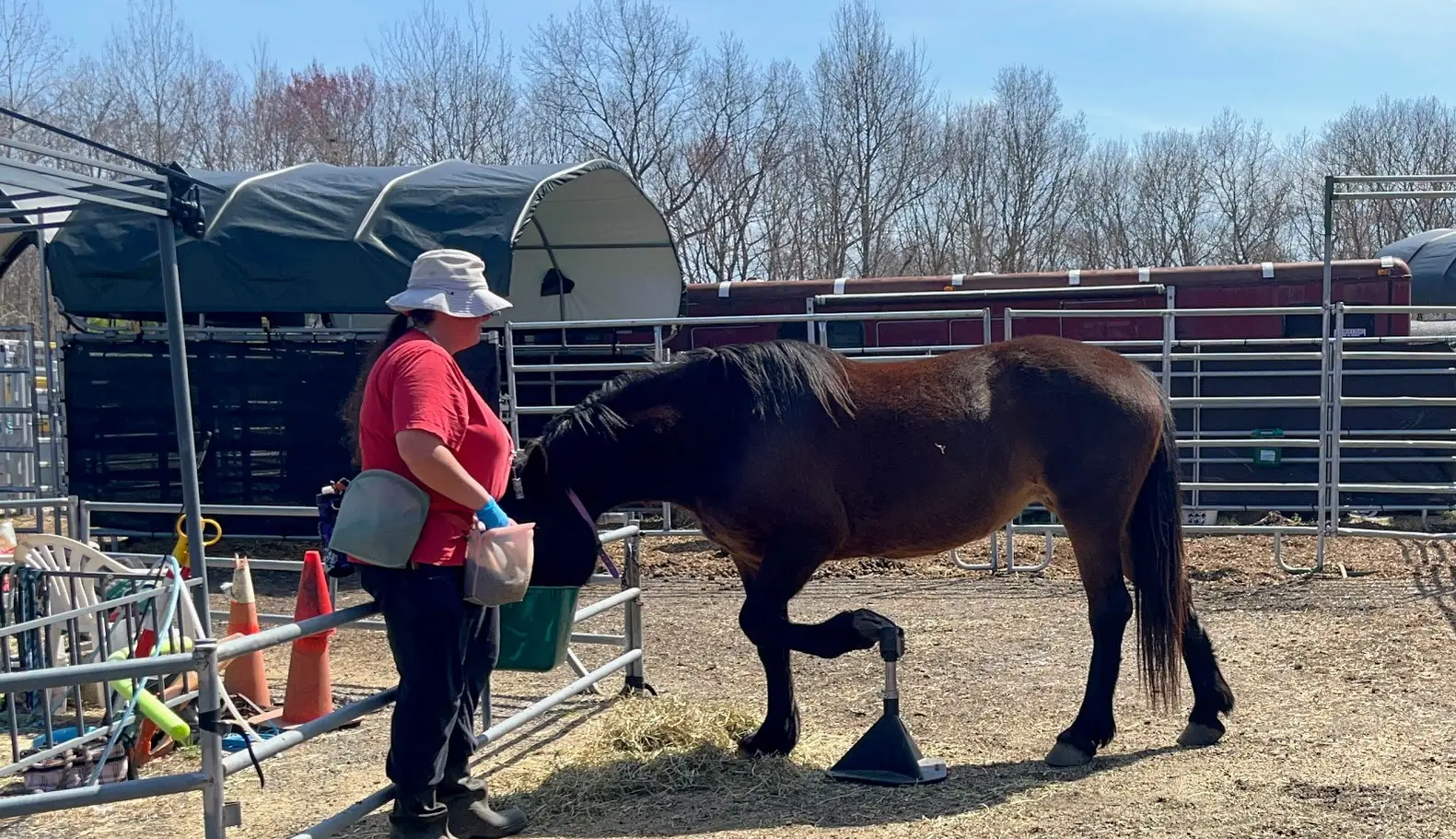
 – Mustang at a self-trimming station at Wild Ride.
Self-what?
Self trimming stations! This is a great way to help your mustang keep their hoofs in top condition pre-and-post gentling. I also love them for barefoot horses born domestically. So what is it? It is a way to allow barefoot horses trim hoofs. Typically set up with a primary water source in the middle, and a bed of gravel (larger, varying sizes), and then larger broken pavers, bricks spaced out enough to leave the edges exposed on top of the gravel. It needs to be large enough that your mustang will walk a few strides so that all of their hoofs experience a trim. We’ve seen them up to ten feet wide around the water source (the larger ones we’ve seen tend to be more compromised of gravel and larger stone/pavers- enough to trim the hoof but not damage it).

Author: The Mustang Hub
The